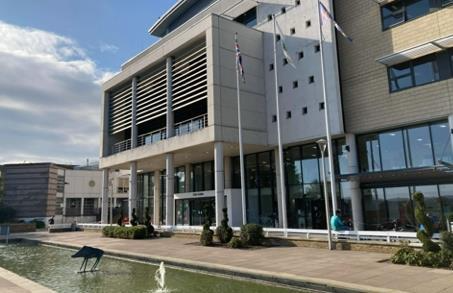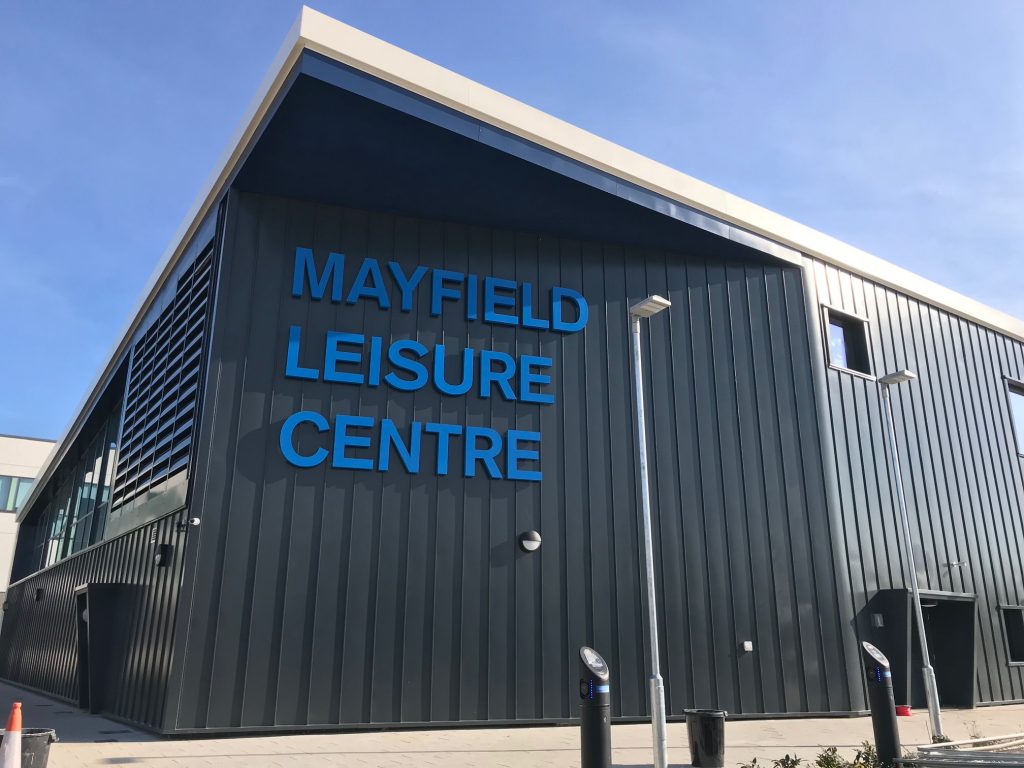
We are delighted to announce that Max Associates has been appointed by Harlow Council to lead the…
Research Highlights Strong Appetite for Physical Activity, but Persistent Barriers Remain
New research from Active Insight has revealed strong public support for physical activity across the UK, while also highlighting ongoing barriers linked to cost, time and accessibility.
For the past four years, Active Insight has delivered exclusive research and intelligence for Max Associates, focusing on strategic outcomes planning, alternative management approaches and leisure procurement. The latest analysis was designed to help councils, operators and system partners better understand how communities engage with physical activity and how participation can be increased amid rising inactivity, health inequalities and service costs.
The study explored the drivers and barriers influencing physical activity, including attitudes towards leisure centres, walking, open spaces and community-based activity. Responses were analysed across age, gender, motivation and activity levels, providing detailed insight into how different population groups think and behave.
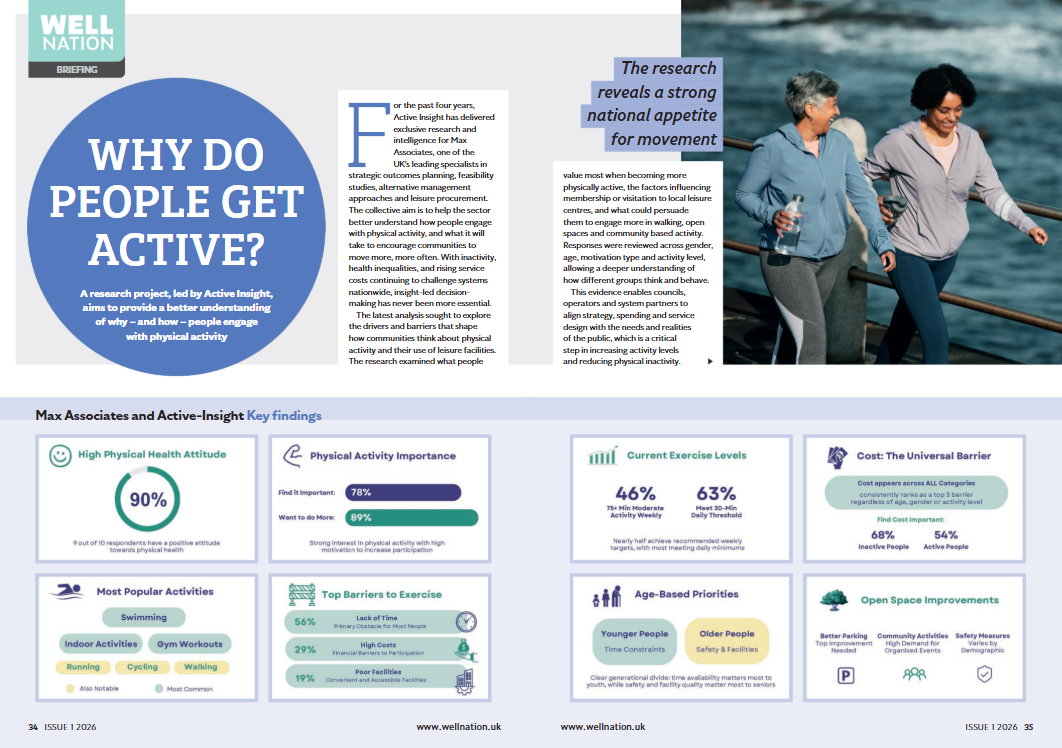
Findings show a strong national appetite for movement. Around 90% of respondents reported a positive attitude towards physical health, 78% said physical activity is important or very important, and 89% expressed an interest in becoming more active. However, actual participation levels varied, with 46% achieving at least 75 minutes of moderate activity per week and 63% describing themselves as active for 30 minutes or more per day.
Facility quality, choice of activity and cost emerged as the most influential drivers of behaviour. Cost was also identified as a major barrier, cited by 29% of respondents overall, rising sharply to 68% among inactive participants compared with 54% of active respondents. Time was the single greatest obstacle to participation, affecting 56% of those surveyed.
The research also highlighted notable differences by gender and age. Women placed greater importance on accessible, high-quality facilities than men and expressed higher levels of concern around safety when walking. Adults aged 25 to 45 prioritised safety and infrastructure, while those aged 45 to 64 placed more value on organised community activities.
Indoor activities such as swimming, gym use and group exercise classes remained the most popular forms of participation. Walking, cycling and running were widely used but identified as under-leveraged opportunities for low-cost, scalable improvements in public health.
Active Insight said the findings provide vital evidence to help align strategy, spending and service design with the real needs of communities—seen as a critical step in increasing activity levels and reducing physical inactivity nationwide.
Related Posts