Forest of Dean District Council (FODDC) commissioned a Strategic Outcomes Planning Model as it recognised the important role that leisure and physical activity plays in supporting the wider health and wellbeing agenda. The key driver for the SOPM was to better understand how people chose to use leisure facilities, green and blue spaces, and the opportunities these provide to address health and wellbeing issues across the Forest of Dean.
Summary of Project
Alongside national and local challenges around inactivity, councils and the wider sport, physical activity, and leisure sector have faced growing financial pressures in recent years, driven by rising service delivery costs and the cost-of-living crisis affecting residents. As a result, it was important for the Council to identify where resources should be prioritised to achieve the greatest impact on increasing activity levels, and how collaborative working in priority areas could deliver positive, long-term and sustainable improvements in residents’ health and wellbeing
The SOPM report adopted a place-based approach to ensure that the provision reflected local needs.
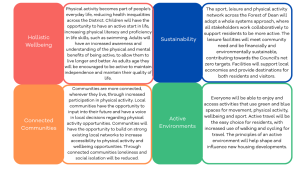
Stage 1: Outcomes set out the key local strategic priorities and examined how sport, leisure and wellbeing could contribute to their delivery. Discretionary services such as sport, leisure and parks are under increasing pressure as councils prioritise statutory services, yet they play a vital role in supporting wider objectives, including public health, active travel, inclusion and net zero.
In the Forest of Dean, physical activity is delivered through a wide partnership network across the Council, private, voluntary, education and community sectors, with the Council’s strategic role focused on understanding provision, identifying gaps and targeting resources where they add most value, such as swimming, accessible open spaces, parks and active travel.
Stakeholder engagement highlighted that increasing physical activity, particularly among priority groups, could contribute to addressing health inequalities, improving mental wellbeing, supporting children and young people and strengthening communities.
Despite strong partnerships and an abundance of green and blue spaces, barriers remain, including rural isolation, transport, affordability, limited awareness of opportunities and ageing facilities.
At the end of Stage 1 the following themes were identified:

Stage 2: Insight brought together a comprehensive evidence base to understand the Forest of Dean’s current and future socio-demographic, health and activity context up to 2043, recognising the need for services to respond to population growth, ageing trends and health inequalities.
This stage included a comprehensive community survey, which had over 400 responses, as well as focus groups with target groups, including children and young adults with disabilities.
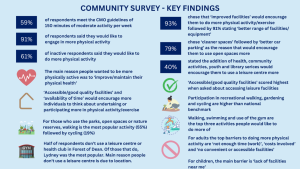
The analysis highlighted an increasing and ageing population, areas of deprivation, relatively positive overall health outcomes alongside specific challenges such as lower physical activity among children and young people, higher inactivity in deprived and rural areas, and accessibility barriers linked to transport, facility location and ageing infrastructure.
While adult activity levels were broadly comparable to national averages and the district benefited from strong outdoor assets, community spaces and partnership working, gaps remained in facility access, participation among priority groups and active travel rates.
Insight from health data, participation analysis, mapping, market segmentation and extensive community and stakeholder engagement reinforced the need for targeted, place-based and collaborative approaches, better use of community and outdoor assets, and focused investment to reduce inactivity, address inequalities and maximise the social and health value of physical activity across the district.
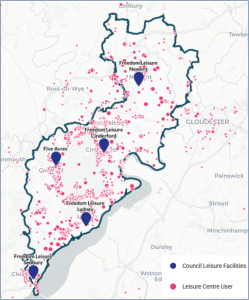
Stage 3: Interventions – focused on identifying how the agreed outcomes could be delivered in a sustainable and long-term way. Based on the evidence and insight gathered in Stage 2, a series of facility and service interventions were identified to enable the Council to effectively deliver its strategic outcomes.
Examples of these interventions included:
- Offering accessible, low-intensity and flexible activity options, such as beginner classes, walking groups and introductory programmes, to help build confidence and establish regular physical activity habits.
- Support and maintain community spaces, particularly in areas of high deprivation and risk of inactivity
- Prioritising capital investment into Cinderford Leisure Centre due to gaining asset
- Working with town and parish councils to increase safe, accessible opportunities for children and young people to be physically active, through improved parks, playgrounds, recreational spaces and youth activity provision, including enhanced play features in green spaces.
- Develop specific programmes for residents with long-term health conditions.
- Outreach services in rural communities.
The strategy includes a range of key performance indicators to measure the success of the strategy against the strategic themes.
Testimonial
“Max Associates were instrumental in delivering a Strategic Outcomes Planning Model to help us better understand how sport, leisure, green and blue spaces can support wider health and wellbeing priorities across the Forest of Dean.
Their place-based approach ensured the strategy reflected the realities of our rural geography, ageing population and diverse communities. Max Associates translated the insight into practical, sustainable interventions — from targeted programmes for priority groups and outreach in rural communities, to investment priorities and strengthened partnership working. The inclusion of measurable performance indicators has provided us with a clear framework to track impact and ensure resources are directed where they add the greatest value.
The SOPM, now badged our Active Wellbeing Strategy, has provided us with a clear, evidence-led roadmap for the future, strengthening our ability to align physical activity provision with wider Council priorities and make informed, strategic investment decisions. I would have no hesitation in recommending Max Associates to carry out similar projects.”
Andy Barge, Director of Communities and Place, Forest of Dean District Council